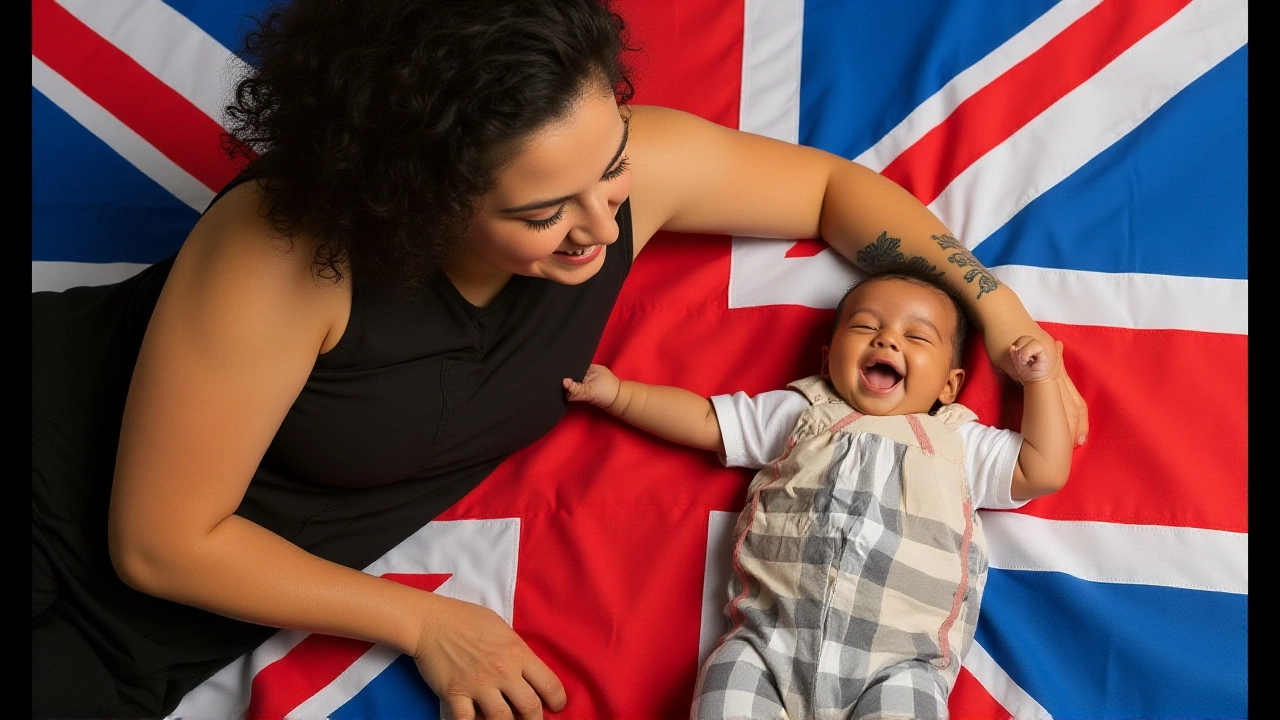
When Harriet Grant, a journalist for The Observer, published her feature on June 22, 2025, she didn't just report news—she opened five front doors. In a poignant profile titled “My British home: five refugees on living in the UK,” Grant stepped inside the lives of displaced individuals who have made the United Kingdom their sanctuary, exploring what “home” truly means when your past is defined by flight and your future is still being written.
The piece landed right in the middle of Refugee Week 2025United Kingdom, an annual arts and culture festival that coincides with World Refugee Day on June 20. But this wasn’t just about policy or politics. It was about kitchen tables, school runs, and the quiet relief of sleeping without fear. Here’s the thing: while headlines often focus on borders and boat crossings, Grant focused on belonging.
Beyond the Headlines: Personal Stories of Displacement
The article profiles five distinct individuals from different corners of the globe, each residing in a different part of the UK—from London to Glasgow, Manchester to Cardiff. Their stories aren’t uniform; they’re messy, hopeful, and deeply human. One refugee, fleeing conflict in Syria, now lives in a council flat where the most prized possession isn’t furniture, but the silence. Another, an unaccompanied minor from Afghanistan, describes the surreal comfort of English rain compared to the dust storms of his homeland.
Grant notes that these refugees are at vastly different stages of integration. Some arrived via official resettlement programs like the Syrian Vulnerable Persons Relocation scheme; others crossed the Channel or spent years in camps in Lebanon or Jordan before reaching British soil. The common thread? A profound redefinition of safety. For many, “home” isn’t just a roof—it’s the absence of sirens. It’s the ability to let children play outside without checking the sky.
The Physicality of Home
In one particularly striking vignette, a refugee from Sudan describes her new kitchen in Birmingham. She talks about cooking traditional dishes using spices sent by relatives still abroad, blending the scent of cumin with the damp chill of a British winter. This sensory detail anchors the abstract concept of displacement in something tangible. Her home is a hybrid space: photographs of family left behind sit next to UK university textbooks and football scarves from local teams.
Another subject, an older man from Iran, speaks about the garden he tends in Leeds. He mentions how growing tomatoes feels like an act of defiance against the uprooting he experienced. These details matter because they show integration not as a statistical outcome, but as a daily practice. They highlight how small acts—planting seeds, learning to say “thank you” to neighbors, navigating the bus system—build a life.

Challenges Remain: Housing, Work, and Isolation
But it’s not all gratitude. Grant doesn’t shy away from the hardships. Several refugees mention the strain of the cost-of-living crisis, with rent eating up Universal Credit payments. One mother in Manchester admits to relying on food banks despite working part-time as a care worker. The article highlights the bureaucratic limbo many face: waiting years for asylum decisions, unable to work legally until status is granted, leading to skills erosion.
A former engineer from Eritrea, now living in shared accommodation in Newcastle, laments the difficulty of transferring his qualifications. He spends his days volunteering with local charities, keeping his mind sharp while waiting for recognition. His story underscores a systemic issue: the UK often struggles to harness the talents of those it protects. The emotional toll is equally heavy. Many speak of “split hearts”—loving their new country while grieving the loss of their old one.
Community and Connection
Despite these challenges, the feature emphasizes the role of community. Neighbors, teachers, and charity workers appear frequently in the narratives. One refugee credits a local librarian in Cardiff with helping him learn English through storytelling sessions. Another mentions the support of a mosque community in Bradford, which provided both spiritual guidance and practical help with housing applications.
These relationships illustrate that integration is a two-way street. It’s not just about refugees adapting to Britain; it’s about Britain making space for them. The article subtly critiques the isolation caused by dispersal policies, where families are scattered across the country far from support networks. Yet, even in isolation, connections form. A shared smile on the Tube, a compliment on a child’s school uniform—these micro-interactions build trust.
Why This Matters Now
Published during Refugee Week, the article serves as a counter-narrative to political rhetoric that often frames refugees as burdens. Instead, it presents them as contributors, survivors, and neighbors. With global displacement figures from the UNHCR showing tens of millions forcibly displaced worldwide, the UK’s experience is a microcosm of a global crisis.
As we look ahead to Refugee Week 2026 (scheduled for June 15–21), the themes raised by Grant remain urgent. How do we balance security with compassion? How do we ensure that “home” is more than just a legal status? The five stories in this feature don’t offer easy answers, but they provide something more valuable: perspective. They remind us that behind every statistic is a person trying to plant a tomato plant, teach their child to read, or simply sleep soundly.
Frequently Asked Questions
What is Refugee Week in the UK?
Refugee Week is the world’s largest arts and culture festival celebrating the contributions, creativity, and resilience of refugees and people seeking sanctuary. It takes place annually in June around World Refugee Day (June 20). In 2026, it will run from June 15 to 21, featuring events like art exhibitions, film screenings, and community meals across the UK to foster understanding and solidarity.
Who wrote the article “My British home: five refugees on living in the UK”?
The article was written by journalist Harriet Grant and published in The Observer, the Sunday sister paper of The Guardian, on June 22, 2025. Grant is known for her in-depth features on social issues, and this piece focuses on personal narratives rather than political analysis.
What are the main challenges faced by refugees in the UK according to the article?
Key challenges include housing instability, reliance on welfare benefits like Universal Credit, difficulties in transferring professional qualifications, and emotional trauma from displacement. Many also face isolation due to dispersal policies that separate families from support networks, alongside the ongoing stress of uncertain asylum statuses.
How do refugees define “home” in the context of this feature?
For the refugees profiled, “home” is defined by safety, stability, and community connection rather than just physical structures. It’s described through sensory experiences like cooking familiar foods, the silence of safe nights, and the ability for children to attend school without fear. It’s also a complex mix of gratitude for safety and grief for lost homelands.
Which organizations support refugees in the UK as mentioned in the text?
The article references support from various entities including the Home Office (for asylum processing), local councils (for housing), and charities such as the Refugee Council and British Red Cross. Community groups, mosques, churches, and local libraries also play crucial roles in providing language classes, counseling, and social integration support.
 Entertainment News